



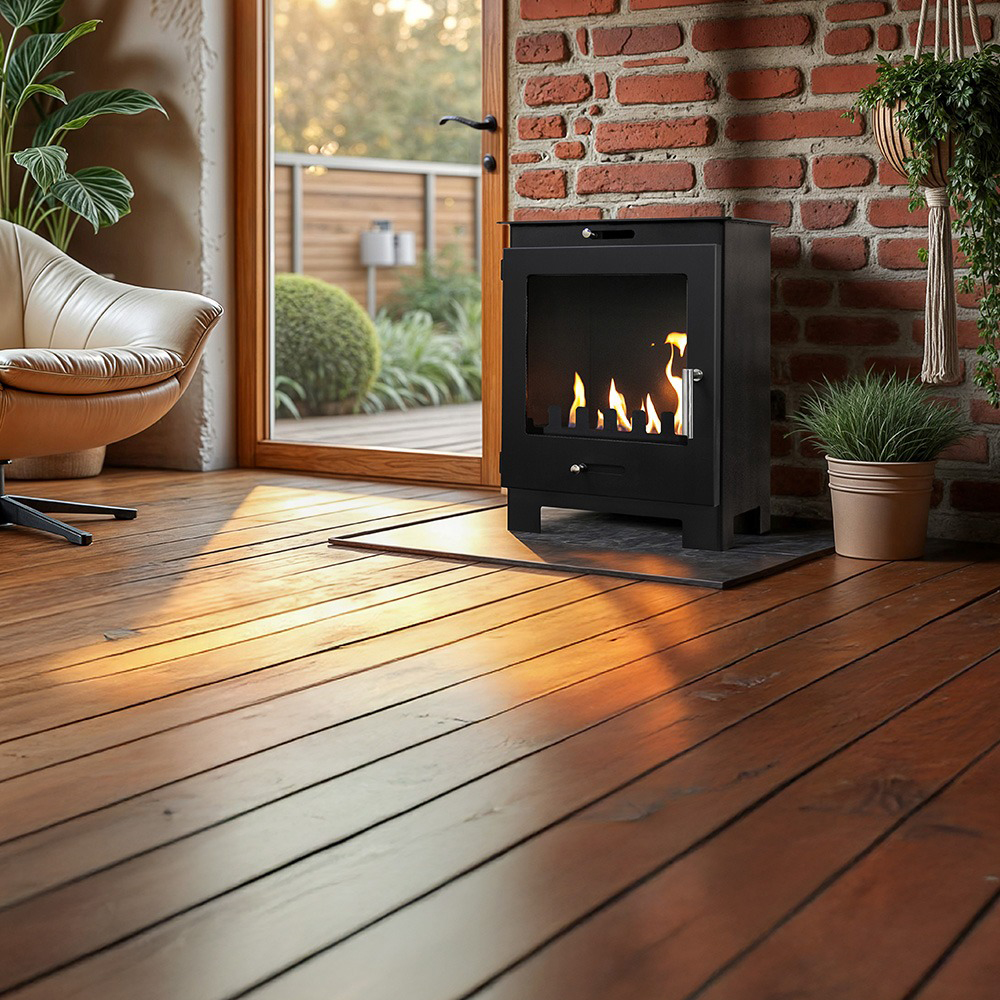
What’s a Bio Stove and Should You Get One for Your Home?
A bioethanol wood-burning stove brings the cozy glow of a real flame, but skips the hassle of wood, gas lines, or even a chimney. Instead, it runs on clean-burning bioethanol fuel – so you get warmth and atmosphere with barely any fuss. It’s a modern twist on the classic wood burner: real firelight, simpler setup, and lower emissions.
People gravitate toward these stoves for their design and flexibility. Unlike old-school models, you can stick one in a room that doesn’t have a chimney or flue, as Arada Stoves points out. It’s just an easier way to enjoy a fire almost anywhere at home.
So, what exactly is a bioethanol “wood-burning” stove? How does it stack up against the real deal? And what should you know before buying?
What Exactly Is A Bioethanol “Wood-Burning” Stove?
A bioethanol “wood-burning” stove looks a lot like a traditional wood stove, but inside, it’s a different story. It burns liquid bioethanol, not logs, so you get those flickering flames and heat – minus the smoke, soot, and chimney drama.
Clarifying The Term: Style Vs. Fuel
“Bioethanol wood-burning stove” is kind of a misnomer. There’s no wood involved. It’s all about the look of a wood stove, but powered by bioethanol fuel.
Manufacturers build them with cast iron or steel, glass doors, and flame displays that mimic the old-school vibe. You get that snug, fireside feeling, but with less hassle.
No ash, no creosote. If you’re retrofitting an old fireplace, you can adapt a bioethanol unit (just follow fireplace safety guidelines for ventilation and clearance).
Understanding Bioethanol Fuel
Bioethanol is a renewable liquid fuel – think fermented corn, sugarcane, even waste plants. It burns clean, mostly releasing water vapor and a bit of carbon dioxide.
Because it’s carbon-neutral (the CO₂ released is about what the plants absorbed), it’s more sustainable than fossil fuels.
You buy bioethanol in bottles, pour it right into the burner. No pipes, no wiring, no chimney needed. Setup’s a breeze compared to a traditional stove.
| Feature | Bioethanol Fuel | Wood Logs |
| Smoke Production | None | Yes |
| Residue | None | Ash/Creosote |
| Renewable Source | Yes | Yes |
| Ventilation Need | Minimal | High |
How A Bioethanol Stove Works
These stoves have a fuel reservoir or tray for the bioethanol. Light it up, and the fuel vaporizes into a steady, visible flame – giving off both heat and light.
Most models, like Henley London Bio Ethanol Burner and others from its line, let you adjust the flame size, and some even have fancy features like automatic ignition or safety shut-offs.
Heat-wise, it depends on the burner and how much fuel you use. They’re mainly for supplemental heat – don’t expect them to replace your central heating.
Bioethanol Stove Vs. Traditional Wood Burner: A Head-To-Head Comparison
Bioethanol stoves and wood burners – totally different beasts when it comes to heat, installation, eco-friendliness, maintenance, and cost. Which one’s best? Well, that depends on what you want: raw heating power, sustainability, or just convenience.
Heat Output And Efficiency
Wood burners pack a punch – they can heat big rooms or even whole houses, especially with well-seasoned logs. Bioethanol stoves? Not so much. They usually put out about a third to half the heat of a wood stove.
Since bioethanol burns clean, you don’t lose heat up the chimney. That’s nice for efficiency, but the total heat is still lower. Bioethanol stoves are best for a little extra warmth or mood lighting, not as your main heat source.
Wood burners are the go-to for cold climates and bigger spaces. Bioethanol is more for snug, well-insulated rooms where you don’t need a roaring fire.
Installation & Flue Requirements
Wood-burning stoves need a chimney or flue to vent smoke. That can mean building or lining a chimney, adding ventilation, and jumping through code hoops – not cheap or quick.
Bioethanol stoves? No flue, no venting. They only release tiny amounts of carbon dioxide and water vapor, so you can plop them almost anywhere – wall-mounted, freestanding, you name it, per EcoSmart Fire.
Renters and apartment dwellers, this is where bioethanol shines. If you own and want a permanent, high-output stove, wood burners still rule.
Environmental Impact & Fuel Source
Bioethanol is made from renewable plants – corn, sugarcane, whatever’s handy. It burns clean, with hardly any particulates or smoke.
Wood burners can be eco-friendly if you use responsibly sourced, dry wood. But they do kick out more particulates and carbon monoxide.
That said, bioethanol’s production and shipping can eat into its eco-cred. Locally sourced firewood might have a lower carbon footprint if you’re lucky enough to have a good supplier.
Maintenance & Cleanliness
Wood burners need regular cleaning – ash, soot, creosote, the works. Chimneys have to be swept, or you risk a fire.
Bioethanol stoves are basically maintenance-free. Wipe the burner, refill the tank, and you’re good. If you hate chores, that’s a big plus.
If you enjoy the ritual of tending a fire, maybe you’ll miss the hands-on upkeep of a wood burner. But most folks won’t.
Ambiance & Aesthetics
Both give you real flames, but the vibe is different. Wood burners have that crackle, ever-changing flames, and even the smell of burning wood. It’s classic, no question.
Bioethanol flames are steady and quiet – sleek, modern, a bit minimalist. No smoke, no odor. You can build them into walls, tables, or go for a super-modern look, as ImaginFires shows.
If you’re after nostalgia, wood burners win. For a clean, urban feel, bioethanol is hard to beat.
Running Costs & Fuel Availability
Wood can be cheap, especially if you buy in bulk or have a local hookup. Prices do fluctuate, though. Bioethanol costs more per hour of burn time, but you skip chimney and flue expenses.
Heavy users might find wood burners more economical in the long run. Bioethanol’s costs are more predictable, and you don’t have to store cords of wood.
Getting the fuel is different, too. Wood’s easy to find in the country; bioethanol comes in bottles – order online, pick up at a shop, whatever’s easier.
Safety Considerations
Wood burners mean open flames, hot surfaces, and flying sparks. You need proper clearances and fireproofing. Chimney fires and carbon monoxide are real risks if you slack on maintenance.
Bioethanol fires don’t make smoke or soot, but you still need to be careful. The fuel’s flammable, and spills can be dangerous. Many stoves have safety features like spill-proof tanks and flame regulators.
Both types need good ventilation. If you’ve got kids or pets, bioethanol’s enclosed designs might feel safer.
Should You Get A Bioethanol Wood-Burning Stove? Your Decision Guide
If you want something that’s easy to install, low on maintenance, and fits a modern aesthetic, a bioethanol stove could be a smart pick. If you’re after big heat, rustic vibes, and lower fuel bills over time, a traditional wood burner’s probably more your speed.
When A Bioethanol Stove Is The Ideal Choice
Bioethanol stoves really shine in modern homes or apartments where a chimney just isn’t going to happen. No venting needed, so you can put one almost anywhere with decent airflow (Renovables Verdes).
You get real flames, no smoke or soot, and barely any mess. Lots of models are portable – move them from room to room, or even outside if you’re feeling adventurous.
They’re not meant for heating huge spaces, but they do add a bit of warmth and a lot of atmosphere. Plus, the renewable bioethanol fuel is a nice touch if you’re eco-conscious.
Quick recap:
- No chimney or flue required
- Easy to install and maintain
- Renewable, low-emission fuel
- Flexible for indoor or outdoor use
When A Traditional Wood Burner Might Be Better
A wood-burning stove is still the go-to for folks who really need high heat output or want to warm up a whole house. These things can crank out up to 20,000 BTU/hr, which is a lifesaver in colder climates.
They’re a natural fit for older or rural homes that already have a chimney. Plus, over time, running costs can be lower since wood usually beats bioethanol fuel on price.
But, let’s be honest, you’ll have to deal with cleaning, ash, and ventilation. If you care most about heating power and that classic ambiance, a wood stove’s probably the smarter buy.
Best suited for:
- Large or drafty rooms
- Long, frequent heating sessions
- Anyone unfazed by a little maintenance and storing logs
Practical Considerations Before You Buy
A bioethanol wood-burning stove gives you real flames – no chimney or flue needed. Before you jump in, think about where you’ll put it, how you’ll ventilate, and what kind of look you want. Accessories can make a big difference too, both for safety and style.
Ventilation Requirements
Bioethanol stoves don’t make smoke or soot, but they do give off carbon dioxide and water vapor. You’ll want enough airflow to keep the air fresh and avoid dampness. Cracking a window or adding a vent usually does the trick.
If your room’s under 20 m², you might need even more ventilation. Arada Stoves mentions that strong draughts actually cut down on fuel efficiency, so don’t stick your stove right by a vent or an open door if you can help it.
Don’t try to use these in totally sealed-off spaces. Check that nothing’s blocking the air inlets or outlets now and then.
Hearth And Clearances
No chimney needed, but you’ll still want a solid, heat-resistant base. Stone, glass, or tile are all good bets for a hearth and help mark out a safe zone around the stove.
Most manufacturers ask for about 60 cm of clearance from walls, furniture, or curtains. Definitely check your manual for the specifics before setting things up.
Avoiding drafts and ensuring the base is level helps keep the flame steady. Placing the stove at eye level or a bit lower works well for both safety and looks.
Types And Styles
There’s a decent variety: freestanding, wall-mounted, or insert styles. Freestanding ones look a lot like classic wood burners and are pretty easy to move. Wall-mounted models save floor space and fit modern rooms, while inserts are nice if you already have a fireplace opening.
Finishes range from black steel to brushed stainless or even ceramic. Some stoves go all-in on the traditional look, with curved doors and details that mimic real log burners. These don’t need permanent installation, so renters or folks without chimneys can still get that flame.
Pick based on your space, your style, and how much heat you want. Small units are great for apartments, bigger ones can anchor an open-plan room.
Accessorising For The “Wood Burner Look”
People love to dress these up. Ceramic logs, coal beds, or pebble sets help fake that real wood-burning vibe. They just sit around the burner, so there’s no fire risk, but it does make the flames look more convincing.
A log basket or some classic fireplace tools can round out the look. Some folks like a mantel or a slate hearth plate to finish it off.
Accessories can also change how the flames reflect light. Neutral or darker tones tend to make the fire look brighter and more natural.
Frequently Asked Questions
Bioethanol wood-burning stoves burn renewable liquid fuel instead of logs, so you get real flames but no smoke or soot. They’re pretty low-maintenance, safe with basic care, and can go in spots where old-school fireplaces aren’t allowed. A few things you need to know:
How does a bioethanol wood-burning stove differ from a traditional wood stove?
Bioethanol stoves run on plant-based liquid fuel, not logs. They don’t make smoke, soot, or ash, so you don’t need a chimney or flue. That means you’ve got more options on where to put one and installation is way simpler.
What are the environmental impacts of using a bioethanol wood-burning stove?
Bioethanol comes from renewable plants, so it’s got a smaller carbon footprint than fossil fuels. It only gives off a bit of carbon dioxide and water vapor when it burns. It’s also cleaner than burning wood, gas, or coal.
Can a bioethanol wood-burning stove be used in a smoke-controlled area?
Yep – since bioethanol doesn’t produce smoke or particulates, these stoves are usually fine for smoke-controlled zones. They meet air quality rules that ban traditional wood burners, so you can use them in cities or densely packed neighborhoods.
What are the maintenance requirements for a bioethanol wood-burning stove?
Maintenance is honestly pretty easy. Just clean the burner once in a while and wipe down the glass or outside to get rid of any residue. No ash, no soot, and no chimney sweeping needed.
Are bioethanol wood-burning stoves more cost-effective than other heating options?
It depends on fuel prices and how much you use it. Bioethanol can cost more per kilowatt-hour than gas or electric, but you’ll save on installation and upkeep since there’s no chimney or venting system. You don’t lose heat up a flue, so efficiency is better.
What safety considerations should be taken into account when using a bioethanol wood-burning stove?
Set the stove on something sturdy and heatproof – nobody wants scorched floors or a wobbly setup. Keep anything flammable well out of the way, and don’t even think about topping up the burner until it’s cooled down. Stick to fuels that are actually meant for bioethanol stoves; improvising here isn’t worth the risk. Follow the manufacturer’s instructions to avoid spills or burns.