



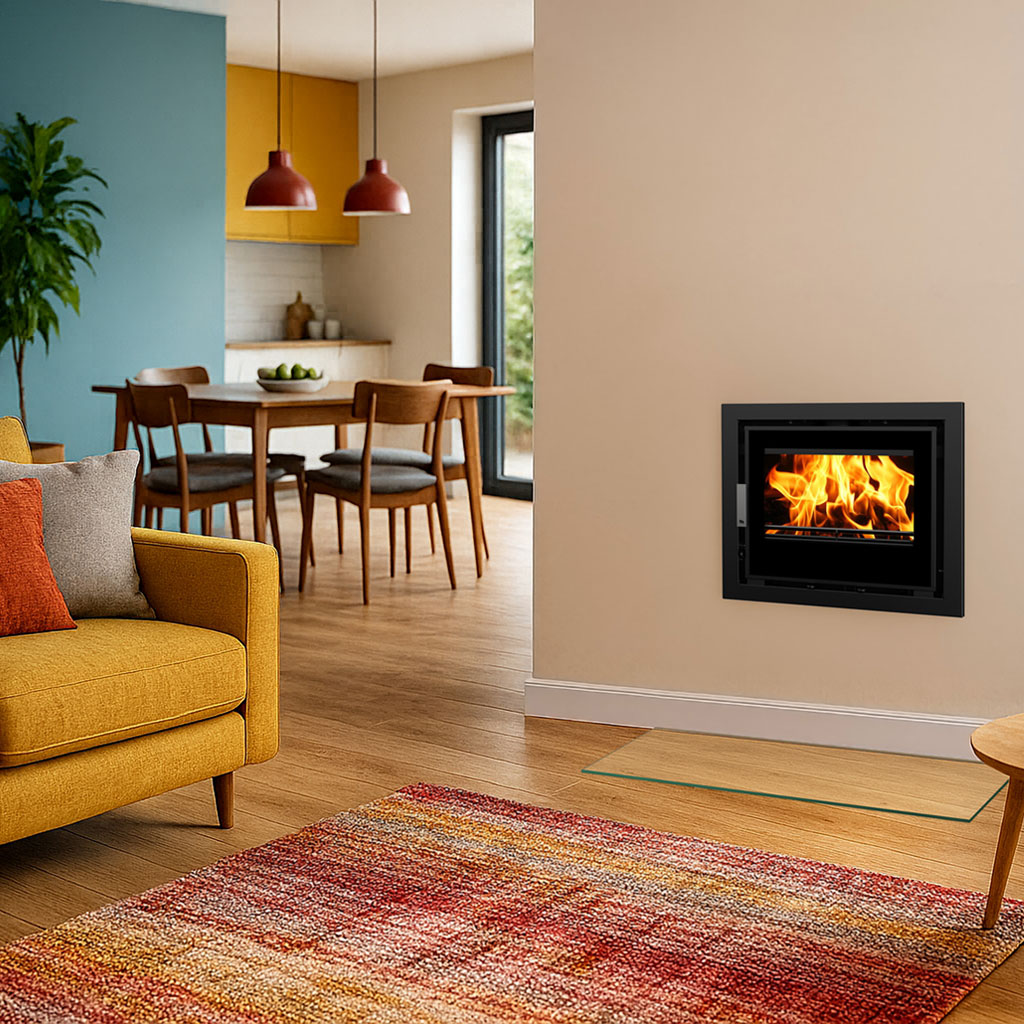
There is nothing quite like the ritual of lighting a wood burning stove on a cold evening; check out one of our favourites: Woolly Mammoth 7i. However, as any seasoned stove owner knows, the quality of your fire is entirely dependent on the quality of your fuel. With the latest EcoDesign regulations now firmly in place, choosing the right wood isn’t just about a “nice-looking flame”—it’s about efficiency, chimney health, and local air quality. In this guide, we break down exactly what you should be putting in your stove this year.
The Golden Rule: The “Ready to Burn” Standard
Before we look at species, we must talk about moisture. Since 2021, UK legislation has made it clear: wet wood is out. Burning wood with a moisture content of over 20% creates excessive smoke, tar (creosote) in your flue, and significantly fewer units of heat. Always look for the “Ready to Burn” logo when buying bags of logs. If you season your own wood, invest in a moisture meter—it’s the most important tool in your fireside kit.
Hardwood vs. Softwood: What’s the Difference?
- This is the most common question we get at Glowing Embers. Neither is “bad,” but they serve different purposes:
- Hardwoods (Oak, Ash, Beech): These come from slow-growing deciduous trees. The wood is dense, meaning it burns longer and provides a steady, radiant heat.
- Softwoods (Pine, Spruce, Larch): These come from evergreen trees. They are less dense and contain more resin. They catch fire quickly and burn hot, but they don’t last as long as hardwoods.
The Pro Strategy: Use softwoods (or kindling) to get the fire up to temperature quickly, then switch to hardwoods to maintain a long, efficient burn.
The Top 5 Woods for UK Wood Burners
Ash: The “King” of Firewood
Ash is widely considered the best all-around wood to burn. It has a low natural moisture content and produces a steady, bright flame with excellent heat output.
Best for: Everyday burning.
Oak: The Marathon Runner
Oak is incredibly dense. It takes longer to catch fire, but once it’s going, it will burn for hours. It is the perfect wood for those long Sunday afternoons or keeping the house warm overnight.
Best for: Long, sustained heat.
Birch: The Easy Starter
Birch produces a beautiful, silvery flame and smells wonderful. It burns quite quickly because it’s a “softer” hardwood, but it’s fantastic for getting a cold stove up to temperature.
Best for: Evening fires when you want instant results.
Beech: The High-Heater
Similar to Ash, Beech burns with a clean, calm flame and provides a very high heat output. It does have a thicker bark, so ensure it is properly seasoned to avoid spitting.
Best for: Maximum warmth during a cold snap.
Apple & Cherry: The Aromatic Choice
Fruitwoods burn slowly and steadily, but their real “superpower” is the scent. They produce a lovely, sweet-smelling smoke that makes your living room feel incredibly festive.
Best for: Special occasions and a premium atmosphere.
What to Avoid (At All Costs)
To protect your EcoDesign stove and your flue warranty, never burn:
- Treated or Painted Wood: These release toxic chemicals into your home and the environment.
- Pallets (Unless you know they are untreated): Often contains chemicals or nails.
- Unseasoned “Green” Wood: It will blacken your stove glass and clog your chimney.
- Resinous Pine: High resin content can lead to soot build-up if the fire isn’t kept hot enough.
A modern stove is a high-tech piece of engineering. To get the 80%+ efficiency it’s designed for, you need to feed it correctly. By sticking to Ready to Burn hardwoods like Ash and Oak, you’ll spend less time cleaning the glass and more time enjoying the warmth. Explore hundreds of wood burning stoves here.